
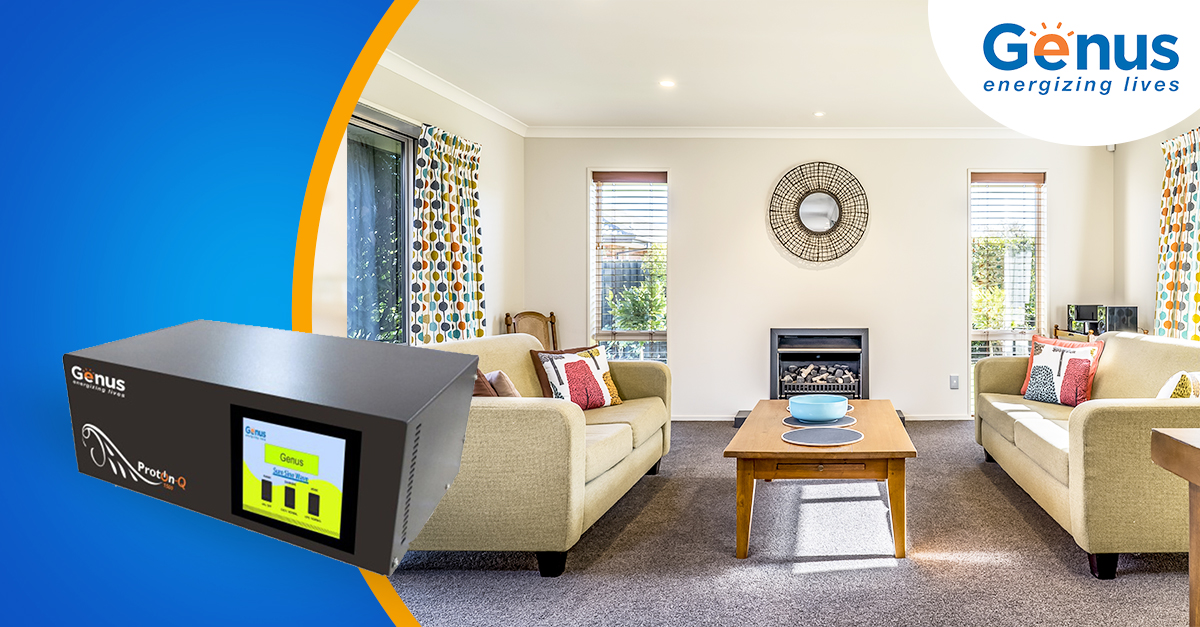
Solar technology is transforming the way we use energy across industries as well as at homes. However, new users may find it challenging to understand the nitty-gritty of solar technology-based devices, and a solar inverter is no exception. While there is a wide range of solar power-based inverters available in the market, in this blog, we will focus on hybrid inverters. As the name suggests, a hybrid solar inverter combines two or more systems. It combines a solar power system with a battery-based inverter to form a single setup.
Hybrid solar inverters are becoming the preferred choice because they combine the benefits of a grid-tied system and an off-grid inverter. But what exactly are they, and why should you consider one for your home? Let’s discuss that today in our blog.
What is a Hybrid Solar Inverter?
As the name suggests, a hybrid solar inverter combines two or more power systems. It works as both:
A solar inverter – converting DC power from solar panels into usable AC power for your home.
A battery inverter – storing surplus energy into batteries for backup during power cuts.
Unlike a conventional solar panel setup where you need a separate battery inverter, a hybrid system combines both functions into one unit, making it compact, efficient, and smarter.
Interestingly, hybrid inverters can also be installed without batteries, giving flexibility to households that want to add storage later.
Key advantages of a Hybrid solar inverter
Uninterrupted power supply
With storage batteries connected, hybrid inverters keep your home powered during outages. No more worrying about blackouts – you get smooth, reliable and uninterrupted power supply.
Optimal solar utilization
On bright sunny days, hybrid solar inverters ensure maximum utilization of the abundant solar radiation and store excess energy in batteries. Therefore, instead of wasting surplus power, you can use it later during cloudy days or at night.
Lower Electricity Bills
Hybrid systems prioritize solar energy first. That means less reliance on the grid, saving money on monthly bills.
Low Maintenance
Unlike diesel generators, hybrid inverters don’t need fuel or frequent servicing. With no fumes or moving parts, they’re clean and hassle-free.
Based on features and specifications, hybrid solar inverters can be categorized into four types:
Basic Hybrid Inverters
Basic hybrid solar battery inverters function like a grid-feed inverter. However, it also allows storage capability in a battery system for self-use. The key disadvantage of a basic hybrid inverter is that it does not have a grid isolation device, which means it cannot power your household in case of a blackout. Therefore, a basic hybrid inverter is a great choice only if your grid supply is stable.
- Work like the grid-tied inverters but with storage options
- Can’t provide backup during blackouts (no grid isolation device)
- Best for areas with a stable electricity supply
Multi-mode Hybrid Inverter with Battery Backup
A multi-mode hybrid inverter is an advanced solution that offers a power back-up, either as a built-in or as a separate unit, when needed. These inverters can power your home, charge batteries as well as feed surplus power to the grid. In case of a grid failure, the unit will switch over to battery supply and operate independently from the grid.
- Advanced models that power homes, charge batteries, and feed surplus to the grid.
- Automatically switch to batteries during grid failures.
- Ideal for homes with frequent power cuts.
All-In-One Hybrid Energy Storage System
Modern hybrid inverters often come with a battery system to form a complete unit. Such a system is known as a Battery Energy Storage System (BESS). It can be installed in your home with an existing solar setup. Such hybrid systems are available in a wide range of sizes and features.
- Comes with an inbuilt battery + inverter in one compact unit.
- Easy to install and manage.
- Popular for urban homes where space-saving is crucial.
AC-Coupled Hybrid and Off-Grid Systems
Usually, most hybrid systems comprise separate inverters that work together to constitute an AC-coupled system. Such systems would typically have a standard solar inverter along with an interactive or multi-mode battery inverter. The multi-mode inverter functions as a battery inverter to complete the energy management system and also optimizes energy usage with the help of software.
- Consist of multiple inverters working together (solar + battery inverter).
- Provide maximum flexibility and advanced energy optimization.
- More expensive but suitable for large homes and commercial setups.
The above classification can help the users to determine what’s best for them. However, it is recommended to research and estimate your energy usage before you opt for a particular hybrid system inverter.
Why Hybrid Solar Inverters Are the Future
With the upsurge in renewable adoption and rising power demand, hybrid inverters are not just a choice – they’re the future of reliable, sustainable, and smart energy management.
Whether you live in a city apartment or a rural home with long outages, hybrid inverters offer flexibility, savings, and peace of mind.
FAQs
Q1. What is the main benefit of a hybrid solar inverter?
It combines solar + battery backup in one system, ensuring uninterrupted power and maximum solar utilization.
Q2. Can a hybrid inverter work without batteries?
Yes. Hybrid solar inverters can run without batteries and allow you to add storage later when needed.
Q3. Is a hybrid inverter better than a normal solar inverter?
Yes. A normal solar inverter only works when the grid is available, while a hybrid solar inverter also provides backup during power cuts.
Q4. Can hybrid inverters power heavy appliances?
Yes. Depending on the capacity, they can power the heavy appliances.
Q5. Do hybrid inverters reduce electricity bills?
Yes. By prioritizing solar power over grid electricity, they significantly lower monthly bills.