
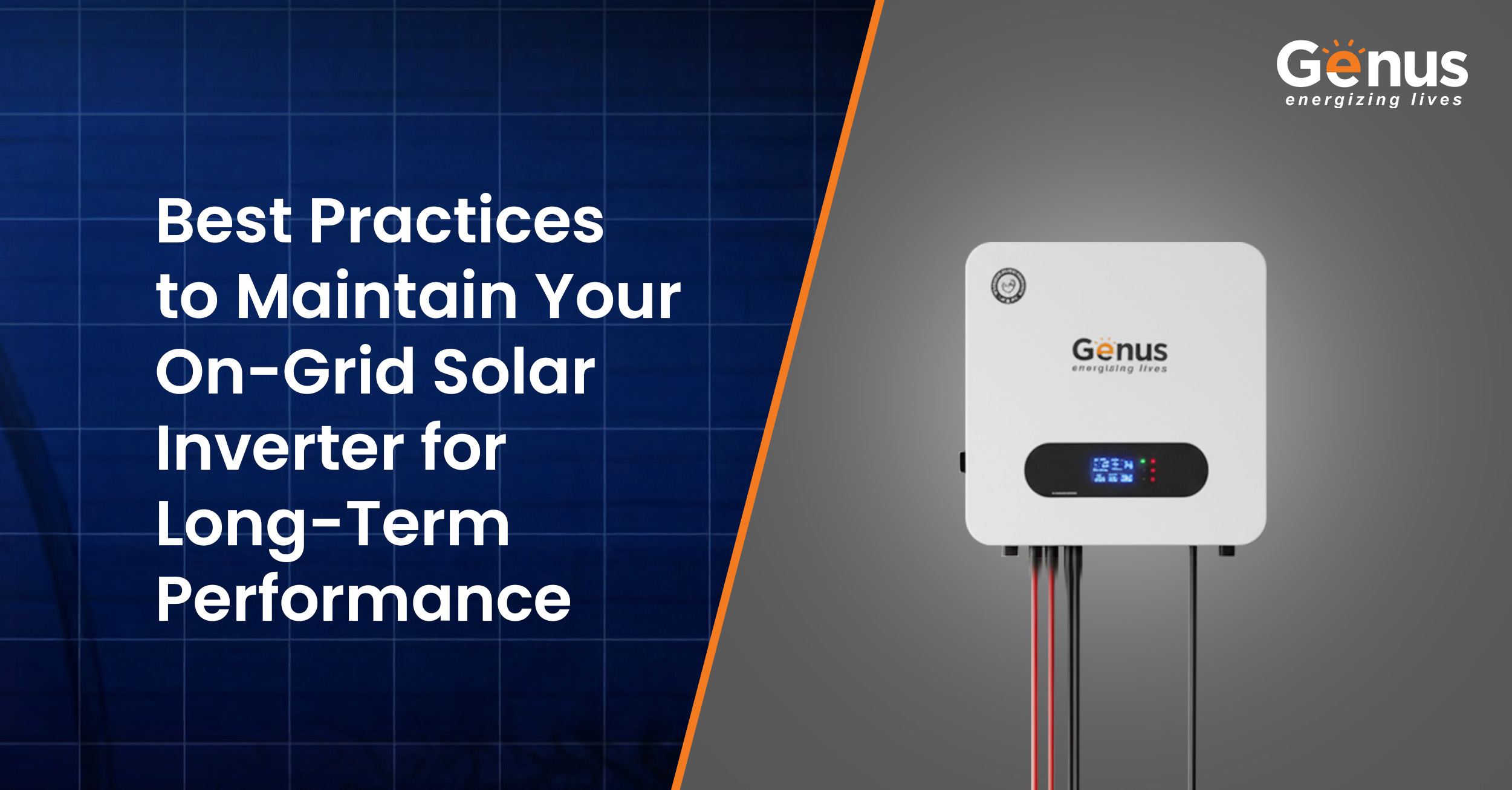
An on grid solar inverter is the heart of the solar system. It converts the DC power generated by the solar panels into usable AC electricity and then sends it to your home and the grid. If it is well maintained, an on-grid inverter can deliver high efficiency, stable performance, lower electricity bills, and long-term reliability. If neglected, it may lead to system shutdowns, reduced output, frequent faults, or lower savings – exactly what a user does not want at all from their solar investment. So to help you out, we are going to discuss the on grid solar inverter maintenance tips in this blog ensuring that it runs smoothly for years and continues to power your home efficiently.
On Grid Solar Inverter Maintenance Tips
Keep the inverter in a cool, well-ventilated area
Heat serves as the biggest enemy of electrical equipment, and this includes solar inverters as well. High temperatures can reduce inverters’ efficiency and shorten their lifespan. The following best practices can help you avoid this situation:
- Install the inverter in a shade covered, well-ventilated and dust-free environment
- Ensure that there is at least 12-15 cm space around the inverter for airflow
- Avoid placing the inverter near heat generating equipment or direct sunlight
Good ventilation helps ensure that the inverter maintains optimal temperature and works smoothly even during high solar generation hours.
Clean the dirt and dust regularly
Dust accumulation is a very common occurrence, and it must be handled properly, else it can result in blocking the airflow that can cause overheating or component failure as well.
Here the cleaning tips you can use:
- Keep the outer surface of the inverter clean with the help of a soft dry cloth
- Never use water or liquid cleaners on the inverter body
- Ensure periodic cleaning of the cooling vents and heat sink area
Keeping the inverter dust-free helps prevent overheating and also improves efficiency.
Use the display for monitoring inverter performance
The on-grid inverters from Genus offer an advanced monitoring platform for remote monitoring that makes it easy to keep a check. Genus Solar GTI comes with a big LCD display that provides important information of system performance and also shows fault code warning views for easy detection. This helps in the early detection of anomalies and therefore prevent costly repairs later.
Safety compliance
Genus On grid solar inverters are compliant with the international quality standards tested by TUV, BV, Dekra etc. With the IP65 ingress protection, enjoy a system that offers reliable performance without any compromise.
Maintenance checklist:
- Get the wiring checked at least once a year
- Ensure proper AC and DC earthing in place
- Install a surge protection device to protect against lightning and grid spikes
Inspect wiring and connection points:
If the system has loose connections that they can lead to:
- Overheating
- Energy loss
- Inverter shutdown
You should seek professional help in this case so that they can check:
- DC cables
- MC4 connectors
- AC output cables
- Tightness of terminals
Safety note: Never touch the inside of wiring yourself and always call a trained installer.
Also Read: Top Mistakes to Avoid When Installing an On-Grid Solar Inverter System
Avoid overloading the Solar System:
On grid inverters are designed to handle a specific amount of load. If you exceed the capacity, the inverter may trip or might produce less power.
Best practice: Choose an inverter capacity that matches your solar panel output and home usage. If your consumption has increased, consider upgrading the system. At Genus, we help our customers to select the best solar solution based on their home usage. Our experts are there right from selection to installation to after sales support for making this journey a seamless experience for you.
Schedule annual professional servicing
Even if the inverter seems fine, its annual maintenance is essential. A qualified technician will check:
- Efficiency levels
- Firmware
- Internal components
- Heat sinks
- DC/AC isolators
- Fault logs
- Earthing and surge protection
This helps make sure that the system remains healthy and continues giving optimal output.
Keep the inverter location dry:
Moisture can lead to corrosion, short circuits, or complete inverter failure. Always make sure to:
- Avoid installing in areas prone to rain, water seepage or damp walls
- Ensure a covered enclosure if installed outdoors
A dry location increases the lifespan of the inverter significantly.
Don’t ignore the error codes or warning sounds
There are some common signs that you should watch out for:
- Sudden beeping
- Drop in the energy generation (less than the usual output)
- Error codes on the display
- Frequent shutting down of the inverter
Such issues should be addressed immediately to prevent long-term damage and protect the inverter.
Also Read: MPPT Solar Inverter vs PWM: Which is a better option for solar setup?
Conclusion:
Maintaining your on-grid solar inverter is the key to a long-lasting and efficient solar system. With these simple on grid solar inverter maintenance tips – regular cleaning, monitoring, annual servicing, proper installation environment and timely troubleshooting, you can easily enjoy stable performance, higher savings and a trouble-free solar experience.
A well-maintained inverter means a well-performing solar system, and these on grid solar inverter maintenance tips really help in improving performance.
FAQs
Q1. How often should I clean my solar inverter?
Clean the on-grid inverter once every 2-3 months to remove dust and ensure proper performing system.
Q2. Can I clean the solar inverter myself?
Yes, you can clean the outer surface of the on-grid solar inverter yourself, but the internal components should be handled by a technician only.
Q3. Why is my on grid inverter producing less power?
The ongrid solar inverter might produce less power due to several common reasons like wiring faults, dirty panels, high temperature, or grid voltage fluctuations.
Q4. Can an on-grid inverter work during power cuts?
No, an on-grid inverter does not work during power outages unless you have hybrid setup storage.
Q5. What is the best place to install an on-grid inverter?
It is recommended to install an on-grid solar inverter in a cool, dry, and well-ventilated location away from direct sunlight.