
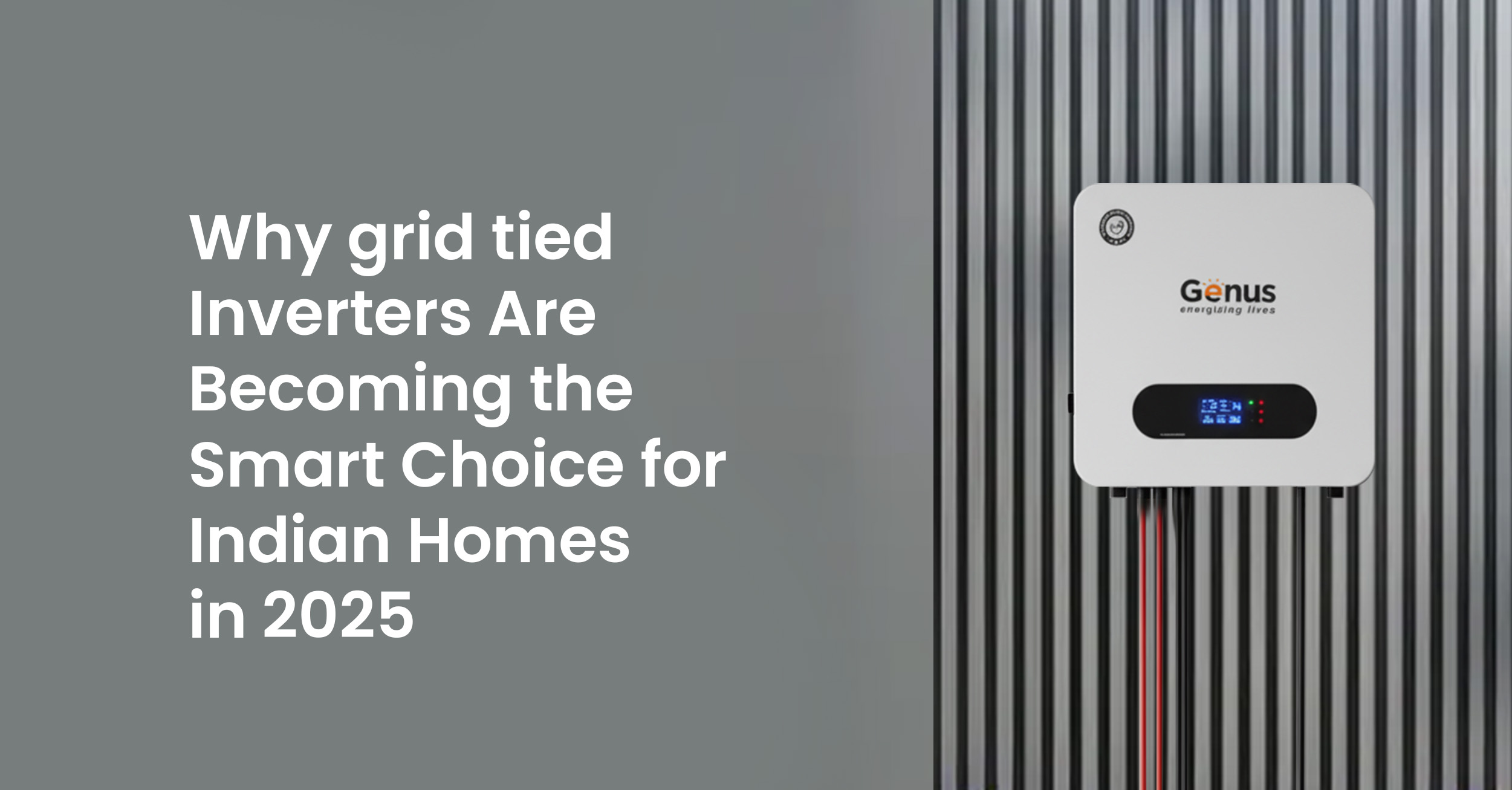
India’s energy landscape is changing fast. With rising electricity costs, growing solar adoption, and the government’s push for renewable energy, homeowners are now looking for smarter, cleaner, and more reliable power solutions. Among all solar technologies, grid-tied inverters (also known as on-grid solar inverters) are quickly emerging as the preferred choice for Indian homes in 2025.
Today we are going to explore what are grid-tied or on-grid solar inverters and why they are becoming the smart choice for Indian homes in 2025.
What Is a Grid-Tied Inverter?
A grid-tied inverter is a solar inverter that connects your solar power system directly to the electricity grid. It converts DC power from solar panels into AC power, which is used by household appliances. When your solar system generates more electricity than your home consumes, the excess energy is automatically sent back to the grid, earning you net metering credits that reduce your electricity bill.
In simple terms, a grid-tied inverter acts as the bridge between your solar panels and your power utility – ensuring you use solar energy first and draw from the grid only when needed.
Why Indian Homes Are Switching to Grid-Tied Solar Inverters in 2025
Lower Electricity Bills
With the price of grid power rising every year, homeowners are looking for practical ways to cut costs. Grid-tied inverters help you generate your own power during the day and offset your consumption at night through net metering. This means your monthly electricity bills can drop depending on your usage.
No Battery, No Hassle
Unlike hybrid or off-grid systems, grid-tied inverters don’t require a battery. This means:
- Lower installation cost
- No maintenance or replacement expenses
- More efficient use of available solar power
This “battery-free” setup makes grid-tied systems ideal for urban households that have a stable grid connection but want to save on electricity bills and carbon footprint.
Also Read: Top Mistakes to Avoid When Installing an On-Grid Solar Inverter System
Advanced Monitoring System
Modern grid-tied inverters from brands like Genus Innovation come equipped with advanced MPPT (Maximum Power Point Tracking) technology and advanced monitoring system that allows you to:
- Monitor system performance in real-time
- Monitor grid interaction
- Optimize system efficiency automatically
This makes solar power not just sustainable, but smart and convenient.
Eco-Friendly
With increasing environmental awareness, Indian homeowners are becoming more conscious of their carbon footprint. A grid-tied inverter uses clean, renewable solar power – directly reducing your dependence on fossil fuels.
High Efficiency & Durability
On-grid solar inverters are designed to operate with high conversion efficiency. They deliver consistent performance with minimal energy loss.
Moreover, they come with long warranties (8–10 years) and are built to handle Indian weather conditions – heat, humidity, and voltage fluctuations included.
Ideal for Urban and Semi-Urban Homes
For homes that experience limited or short power cuts, grid-tied systems offer the perfect balance between performance and cost. They provide uninterrupted solar power during the day and seamless grid supply at night – all while reducing electricity costs and maintenance headaches.
Genus Grid Tied Inverters: Smart Power for Smarter Homes
When it comes to reliable grid-tied solar inverters, Genus Innovation stands at the forefront. Our grid-tied inverter range including Single phase and Three phase series are designed for Indian homes that demand performance, safety, and savings.
Also Read: What is MPPT in solar inverter and how it increases solar panel output?
Key Highlights:
- Advanced MPPT-based efficiency
- Compatible with solar panels
- Supports net metering integration
- Eco-friendly and maintenance-free design
- Long life and reliable backup performance
Whether it’s a small home or a large setup, Genus on-grid solar inverters ensure that every unit of sunlight is converted into usable, bill-saving power.
Conclusion
In 2025, energy independence isn’t a luxury – it’s a necessity.
Genus Grid-tied inverters have proven themselves as the smart, cost-effective, and sustainable choice for Indian homes. With their ability to lower bills, reduce maintenance, and deliver long-term reliability, they’re redefining how India powers its future.
Choose smart. Choose solar. Choose Genus.
Because when your home thinks ahead, your power should too.
FAQs
- What is the difference between grid-tied and off-grid inverters?
A grid-tied inverter connects to the electricity grid and uses net metering, while an off-grid inverter relies entirely on batteries to provide backup during power cuts. - Do grid-tied inverters work during power cuts?
No, they automatically shut off during power outages for safety reasons. - Is maintenance required for grid-tied systems?
They require minimal maintenance – only regular panel cleaning and performance checks. - Are grid-tied inverters suitable for Indian weather?
Yes, high-quality inverters like Genus on-grid solar inverters are designed to handle voltage fluctuations, dust, and high temperatures. - What capacity inverter should I choose for my home?
It depends on your power needs. For most Indian homes, a 3 kW to 5 kW inverter is ideal. Larger homes may require up to 10 kW or more.