
Power cuts are still a reality in many parts of India, disrupting daily life, work-from-home routines, and household comfort. This is why inverters have become an essential home appliance rather than an optional backup. However, choosing the right inverter can be confusing, especially with multiple technologies available in the market.
One of the most important factors that determine inverter performance is the type of output waveform it produces. In this blog, we will clearly explain the difference between sine wave and square wave inverters, how they work, and which option is better for your home. By the end of this guide, you will be able to make an informed decision that protects your appliances, saves energy, and offers long-term value.
How Does an Inverter Work?
An inverter plays a critical role in your power backup system by converting electricity into a usable form for home appliances. Inverter batteries store energy as DC (Direct Current), but household appliances operate on AC (Alternating Current). The inverter converts this stored DC power into AC power during outages.
The quality of this AC power (known as the waveform), directly impacts appliance performance, efficiency, noise levels, and durability. This is where sine wave and square wave inverters differ.
What Is a Sine Wave Inverter?
A sine wave inverter produces a smooth, continuous AC waveform that closely matches the electricity supplied by the utility grid. Because of this grid-like output, appliances connected to a sine wave inverter operate exactly the same way they do on mains power.
Modern homes with electronic and motor-based appliances benefit greatly from sine wave inverters, as they ensure stable voltage, minimal power loss, and safe operation across all devices.
What Is a Square Wave Inverter?
A square wave inverter generates a basic, stepped waveform with abrupt transitions between voltage levels. This type of waveform is less refined and does not resemble grid power.
Square wave inverters may be suitable only in limited cases such as:
Running very basic appliances like incandescent bulbs or simple fans and situations where initial cost is the only priority.
However, they are not recommended for modern households due to compatibility and performance issues.
Why sine wave inverter better than square wave inverter?
So now let us discuss how sine wave inverters are better than square wave in every aspect, especially when you are looking for peace of mind and long-term reliability.
When it comes to the conversion of DC to AC, the efficiency of sine wave inverters is more than square wave. They ensure minimum power loss (with improved efficiency), savings in electricity bills and better-performing appliances.
While square wave inverters may appear cheaper, they often lead to hidden long-term costs. Appliances running on square wave power may produce noise, heat up excessively, perform poorly, or even get damaged over time.
A sine wave inverter, on the other hand, offers higher efficiency, appliance safety, and peace of mind-making it the smarter long-term investment.
Also Read: Installing Sine Wave Inverter :Step-by-Step Guide
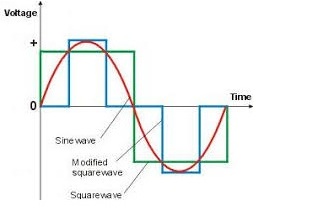
In the figure shown below, the red line is the one showing a sine wave while the green line shows how the square wave looks like. The smooth change-over of the sine wave is clearly visible and this is the same power that the grid supplies. Since the home appliances also work on the power of grid therefore inverter power needs to work as a grid power substitute and should be in sine wave form.
Benefits of sine wave inverters:
Now let us discuss the benefits of using sine wave inverters and why they are the best choice for Indian homes:
- Imitate grid-quality power
- Safe for sensitive and modern appliances
- Operate quietly with minimal heat
- Deliver higher energy efficiency
- Support all types of household loads
- Ensure precise and stable device performance
Let’s understand these benefits in detail.
Perfectly imitates grid power
The quality of the power produced by sine wave inverter is same as that supplied by the utility grid. This means that the appliances do not feel any difference between inverter supply and grid supply.
Safe for sensitive appliances
Devices like TVs, LED lights, washing machines, ACs etc. are commonly found in all modern homes now. Some of these appliances are sensitive in nature and all of them need stable waveform and voltage. Sine wave inverters serve as a perfect fit in this case as they offer smooth power delivery that reduces the risk of glitches, overheating or damage.
Less heat, less noise
The square wave inverters often make the fan hum loudly, motors and other devices to heat up and other such issues. On the other hand, devices run smoothly on sine wave power that keeps them quieter and cooler. This helps to keep the environment peaceful while the durability of appliances also improves.
Higher efficiency
Since the working of sine wave inverters is more efficient, they help reduce the overall energy losses, less strain on the batteries and in turn, quick charging. In the long run, this helps in longer battery life and lower power consumption.
Supports all types of appliances
From small devices like phone chargers and laptops to heavy loads like water pumps and refrigerators, a sine wave inverter can efficiently handle them all without any issues
Precision
The devices having control circuits for voltage, speed and timing demand pure sine wave supply for precise operation. Unlike the square waves, the transitions in sine waves are smooth with zero noise and heat which also helps in improving performance.
| Feature | Sine Wave Inverter | |
| Waveform | Natural, smooth and grid-like wave | Abrupt waveform |
| Device compatibility | Works with all devices (including sensitive appliances) | Works with basic appliances |
| Noise and vibration | Quiet operation | Often noisy |
| Efficiency | Higher conversion efficiency | Lowe efficiency, more losses |
Sine wave inverter or square wave – Which is the better option?
A sine wave inverter is clearly the better choice when you consider efficiency, durability, appliance safety, low maintenance, and long-term savings. While square wave inverters may have a lower upfront cost, they often lead to higher expenses in the long run due to reduced battery life, appliance repairs, and inefficient performance.
Now you are well aware of the risks associated with square wave inverters for your device performance and their life. If you look for a cheaper cost then poor device performance and less durability will serve as the much higher additional costs. So it is not just the initial cost but the total ownership cost that matters. Increased efficiency and peace of mind add value to sine wave inverters making them a better choice for sure.
Also Read: Best Reasons To Choose a Pure Sine Wave Inverter
Final thoughts:
Selecting the right inverter is important, not just to handle the power cuts, but to also ensure safe and efficient working of all the home appliances. Along with better efficiency, it also brings peace of mind and savings. So look for the benefits such as long battery life, quiet and smooth operation of appliances, eco-friendly nature etc. Make the smart choice today and upgrade to a pure sine wave inverter from Genus that are safe, efficient and backed by the trust of Genus technology. If long-term value and performance are something that you are looking for then Genus inverters are the perfect choices for you. Call now and upgrade to smart technology today.
FAQs
Q. What is the difference between a sine wave and square wave inverter?
A. Sine wave inverters produce grid-like, smooth power while square wave inverter creates choppy, abrupt waves that can harm the sensitive appliances.
Q. Why sine wave inverters are the best choice for my home?
A. The sine wave inverters offer higher efficiency, quieter operation, safe usage with all types of appliances and longer appliance life.
Q. Which is the best inverter for sensitive appliances like TVs and refrigerators?
A. Pure sine wave inverter is the best inverter for home use, especially for sensitive appliances such as refrigerators, TVs, washing machines and laptops.
Q. Is sine wave inverter more energy-efficient?
A. Yes, the conversion efficiency of sine wave inverters is high that reduces the power loss and saves on the electricity bills as well.
Q. Is a sine wave inverter suitable for solar power systems?
A. Yes, sine wave inverters work perfectly with the solar power setups, making them an energy-efficient and eco-friendly choice for homes.